Recently, Prof. Zhanshan Wang and Prof. Xinbin Cheng's team member Prof. Zhenyue Chen, in collaboration with Professor Daniel Razansky's team from the University of Zurich and ETH Zurich in Switzerland, achieved a significant breakthrough in functional neuroimaging. The joint team developed a multimodal hybrid optical-magnetic resonance imaging platform termed as HyFMRI, achieving the first simultaneous real-time monitoring of neuronal, astrocytic, and hemodynamic responses. This breakthrough overcomes the technical bottleneck where conventional imaging techniques cannot simultaneously achieve cellular resolution and whole-brain coverage, providing a novel research tool for elucidating neuro-glia-vascular coupling mechanisms. The research findings, entitled “Non-invasive large-scale imaging of concurrent neuronal, astrocytic, and hemodynamic activity with hybrid multiplexed fluorescence and magnetic resonance imaging (HyFMRI)”, have been published in the leading optics journal Light: Science & Applications (DOI: 10.1038/s41377-025-02003-9).
Research Background
A critical gap currently exists in systematic understanding and experimental validation of the role of astrocytes in neurovascular coupling and their functional links with other brain cells. Despite a broad selection of functional neuroimaging tools for multi-scale brain interrogations, no methodology currently exists that can discern responses from neural and glial cells while simultaneously mapping the associated hemodynamic activity on a large scale.
Research Highlights
To address the unmet needs, the joint research team developed a hybrid platform integrating a 9.4T high-field magnetic resonance system with a multi-channel optical imaging module based on fiber-optics (Figure 1).
By integrating the customized RF surface coil, fiberscope and 3D-printed components, the platform ensures MRI compatibility while providing physiological safeguards for experimental animals. The fiberscope was featured with ~70 μm spatial resolution and 15 mm field of view covering the entire mouse cortex.
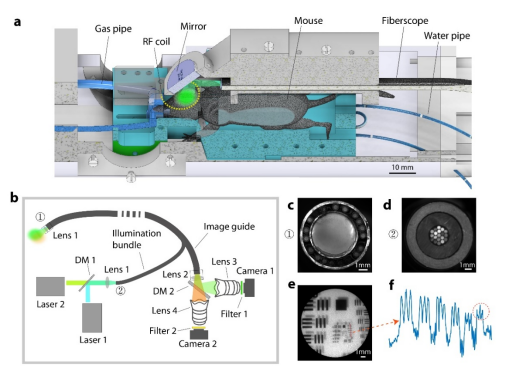
Figure 1: The hybrid multiplexed fluorescence and magnetic resonance imaging (HyFMRI) platform.
The joint team successfully captured neuronal signals (RCaMP1.07), astrocytic calcium signals (GCaMP6s), and BOLD signals in the contralateral forelimb somatosensory cortex of mildly anesthetized mice following electrical stimulation (Figure 2). Temporal analysis revealed a distinct delay in activation from neuronal → astrocytic → BOLD signals, elucidating the temporal transmission pathway of neurovascular coupling.
Further correlation analysis revealed strong correlations between neuronal and astrocytic signals, whereas both showed weaker correlations with BOLD signals. This indicates that BOLD signals represent a composite reflection of multiple physiological processes and cannot be directly equated with neural activity. It also provides direct evidence for astrocytic involvement in neurovascular coupling.
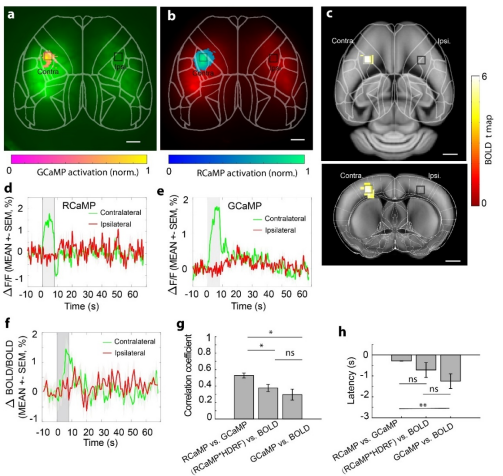
Figure 2: Cell type-specific multiparametric brain activation responses.
Scientific Significance
The HyFMRI platform, for the first time, achieved simultaneous multi-parametric recording of neuronal, astrocytic, and hemodynamics responses within a living subject, thus providing a novel tool for investigating neurovascular coupling mechanisms as well as for clinical applications in neurodegenerative diseases, stroke, and cognitive impairment.
Research Team and Contributions
This study was jointly led by Professor Zhenyue Chen from Tongji University and Professor Daniel Razansky from the University of Zurich and ETH Zurich. Tongji University is the primary institution for the paper. Zhenyue Chen, Yi Chen, and Irmak Gezginer are the co-first authors, with Professor Daniel Razansky being the corresponding author. PhD candidate Qingxiang Ding from Tongji University, and researchers Hikari A. I. Yoshihara, Xosé Luís Deán-Ben, and Ruiqing Ni from the University of Zurich and ETH Zurich also contributed to this work.
Paper Information
Chen, Z., Chen, Y., Gezginer, I. et al. Non-invasive large-scale imaging of concurrent neuronal, astrocytic, and hemodynamic activity with hybrid multiplexed fluorescence and magnetic resonance imaging (HyFMRI). Light Sci Appl 14, 341 (2025).
https://doi.org/10.1038/s41377-025-02003-9