Recently, the team of professor Zhanshan Wang and Xinbin Cheng from the School of Physics Science and Engineering at Tongji University achieved high-speed sorting of sub-20 nm chiral particles utilizing a mirror-enhanced toroidal metasurface. This work has significant implications for high-speed enantiomer separation and holds great potential for applications in medical research, industry, and drug development. The related research findings titled “High-Speed Sorting of Sub-20 nm Chiral Particles via Toroidal-Enhanced Separated Potential Wells” have been published in “Nano Letters” and selected as a cover story.
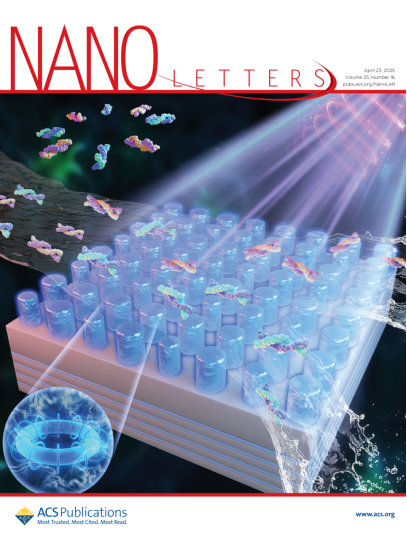
Chiral sorting is essential in various fields, including biomedical studies, materials science, and pharmaceuticals. Chiral molecules in nature predominantly exist at the nanoscale. The remarkable capabilities for manipulating light fields of metasurfaces enable the generation of strong near-field gradients, overcoming the diffraction limit and facilitating the control of nanoscale chiral particles. However, existing works focus on the separation and discrimination of chiral nanoparticles in static fields, failing to meet the demands of practical applications.
To address this, the team of professor Zhanshan Wang and Xinbin Cheng proposed a high-speed sorting method for nanoscale chiral particles by integrating enantioselective potential wells with a flow field. As illustrated in Figure 1, a mirror-enhanced toroidal dipole significantly amplifies the electromagnetic field above the metasurface, enhancing the chiral gradient force and thereby creating position-separated enantioselective potential wells. By introducing a fluid field to work in tandem with the enantioselective potential wells, a significant difference in the motion of the enantiomers is induced.
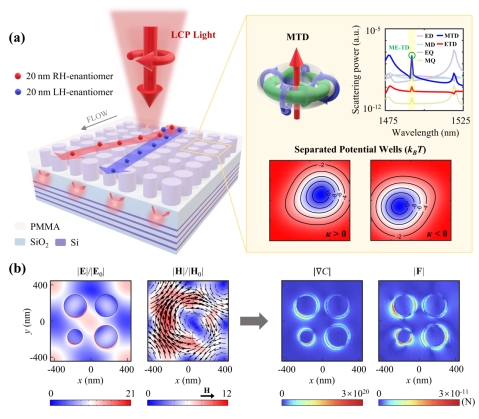
Figure 1. High-speed chiral sorting platform utilizing a mirror-enhanced toroidal metasurface.
The positions and shapes of the potential wells differ for each enantiomer, causing two types of particles to exhibit distinct motion behaviors under the same flow field. Moreover, due to the asymmetric distribution of potential wells across the structure, the motion of the particles is also influenced by the angle of the flow field. Based on this principle, the research team designed a periodically modulated fluid field, as shown in Figure 2(a). The fluid velocity is set to 800 μm/s, with the angle periodically switching between 80° and 170°. A stream of 20 nm chiral particles flows through the sorting area, which consists of 80 × 80 periodic metasurface structures. At the outlet, the minimum separation distance between the two types of particles reaches 32 μm. As shown in Figure 2(b), chiral sorting of 200 nm particles is achieved under a constant flow field, with a minimum separation distance of 48 μm. Additionally, static separation of 20 nm chiral particles is also demonstrated in separated potential wells, as shown in Figure 2(c). Theoretical calculations indicate that this method can be further extended to high-speed sorting of larger or smaller particles, as well as particles with different chirality factors.
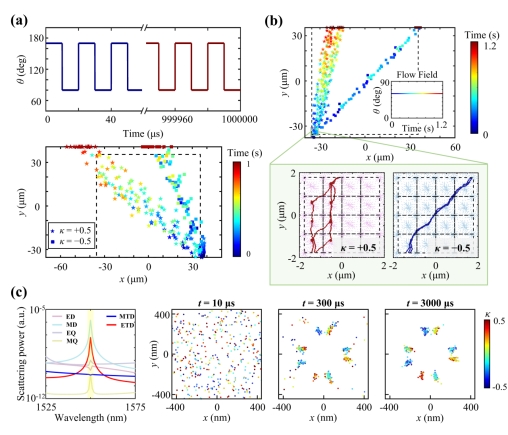
Figure 2. High-speed sorting of chiral particles.
This method enables high-speed, high-efficiency sorting of chiral particles at the nanoscale, with potential applications in separating enantiomers in biological systems or purifying chiral drugs with distinct pharmacological properties. It opens new opportunities for advanced separation techniques in microfluidic devices and lab-on-a-chip technologies.
Ph.D. student Jingyao Zhang and Assistant Professor Tao He from Tongji University are the co-first authors of this paper. Professor Xinbin Cheng, Professor Yuzhi Shi and Associate Professor Zeyong Wei from Tongji University are co-corresponding authors. Other authors who made significant contributions include Professor Zhanshan Wang, Ph.D. students Chengfeng Li, Chengfeng Lu and Chengxing Lai from Tongji University, and Associate Professor Qinghua Song from Tsinghua University.
Link to the paper:https://doi.org/10.1021/acs.nanolett.5c00406